
 Mobile App Development
 Software Development
 AI Solutions & Automation
 IoT Solutions
 Web Development
 Cyber Security
AI Development
Company in Sydney
Custom AI Development Services for Sydney Businesses
Supportsoft Technologies helps Sydney businesses identify, build and integrate practical AI solutions around their business goals. From custom AI software and intelligent workflow automation to machine learning and AI integrations, we develop solutions designed for real operational needs.
Custom AI Solution Development
AI solutions aligned with your business objectives, workflows and users.
AI Integration and Automation
Connect suitable AI capabilities with existing software, systems and business processes.
Reliable AI Implementation
Plan, test and implement AI solutions with attention to data, security and practical business requirements.

10+
Years Experience

1,000+
Projects Delivered

99%
Client Satisfaction
AI Development Services for Sydney Businesses
From developing tailored AI systems to connecting intelligent capabilities with existing software, Supportsoft Technologies helps Sydney businesses identify practical opportunities for AI adoption. Our development approach focuses on useful applications, reliable integration and solutions aligned with real operational requirements.

AI Consulting & Proof of Concept

AI Chatbots & Conversational Systems

Generative AI & LLM Solutions
Machine Learning & Predictive Modelling
Computer Vision & Image Processing

Custom AI Software Development
How We Approach AI Projects
Business-Driven Solution Design
Define the problem, intended users and measurable outcomes before selecting an AI approach.
Data & Risk Considerations
Evaluate data quality, privacy, security and appropriate human oversight during solution planning.
Integration & Maintainability
Consider compatibility with existing platforms, ongoing support and future changes from the outset.
Collaborative Delivery
Work with stakeholders to clarify requirements, review solution options and validate results against agreed objectives.

Business-Focused AI
Start with your business objectives, user needs and practical use cases.

Responsible AI Implementation
Consider data access, privacy, testing and appropriate human oversight during solution planning.

Designed for Future Development
Consider maintainability, integration requirements and how the solution may evolve as business needs change.

Collaborative Technical Delivery
Work with our team to clarify requirements, evaluate options and align the proposed solution with your project goals.
From AI Requirements to Production-Ready Solutions
Successful AI development starts with a clearly defined business problem and a realistic implementation plan. Supportsoft Technologies helps Sydney businesses assess AI opportunities, evaluate technical feasibility, develop tailored solutions and prepare them for integration into existing operations.

Principles That Guide Our AI Delivery

Requirements-Led Development
Establish clear objectives and acceptance criteria before selecting the implementation approach.

Data-Aware Planning
Consider data availability, quality, privacy and access requirements early in the project.

Integration-Focused Engineering
Design appropriate connections with existing software, systems and business processes.

Quality-Conscious Delivery
Validate outputs, test relevant failure scenarios and assess readiness against agreed project requirements.
AI Solutions for Industry-Specific Business Needs
Different industries have different data, operational requirements and customer expectations. Supportsoft Technologies helps Sydney businesses assess where AI can support their workflows, improve access to information and assist decision-making. Each proposed solution is evaluated against the business problem, available data, integration requirements and practical feasibility.
Business-First AI Development
Start with a clearly defined operational challenge and select an AI approach that fits the intended outcome.
Business-First Planning
Define the operational problem and intended outcome before selecting a technology.

Data-Aware
Solution Design
Assess data quality, availability, access permissions and privacy requirements.

Integration Considered Early
Plan how proposed AI capabilities could work with relevant software and existing workflows.

Responsible Evaluation
Consider reliability, security, privacy, human oversight and relevant failure scenarios.
How Sydney Businesses Can Create Value with AI
For businesses across Sydney, AI is most useful when it addresses a specific operational challenge. Whether the goal is to simplify information-heavy tasks, make better use of business data or improve digital service delivery, the right approach depends on existing workflows, data quality and the outcome a business wants to achieve.
Start with a Measurable Business Outcome
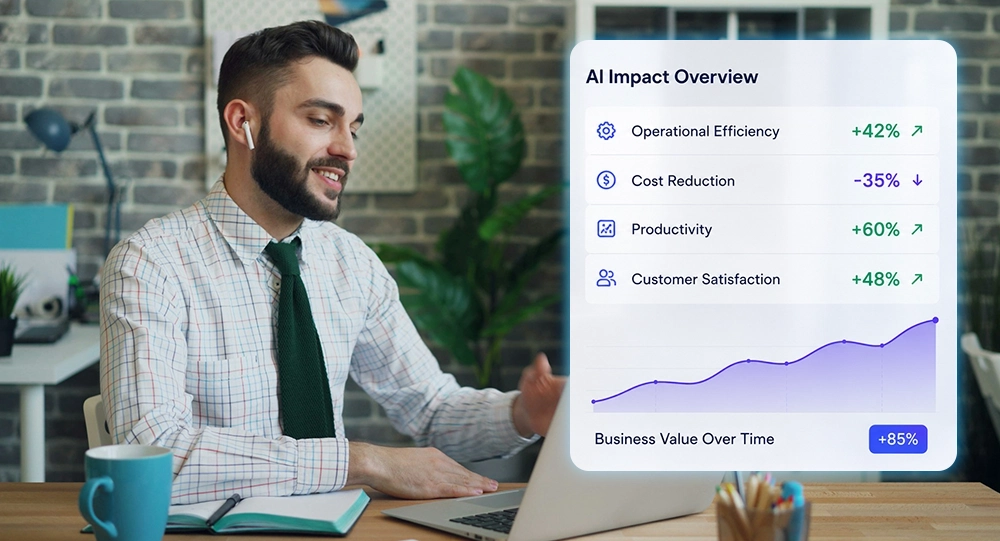
Identify the problem, establish a baseline and determine how the proposed AI solution will be evaluated before development begins.

Reduce Operational Bottlenecks
Use AI-assisted document processing, information extraction and task classification to help teams manage repetitive work where automation is appropriate.

Turn Business Data into Useful Insights
Apply machine learning and analytical models to suitable datasets to identify patterns, support forecasting and provide additional context for business decisions.

Make Digital Services More Responsive
Use conversational AI and virtual assistants to help users find relevant information, navigate common enquiries and reach the appropriate support channel.

Improve Access to Business Knowledge
Develop AI-powered search and retrieval tools that help authorised employees locate relevant information across approved documents and knowledge repositories.
Connect Disconnected Business Processes
Integrate appropriate AI capabilities with existing applications and workflows, reducing unnecessary manual handoffs while preserving suitable access controls.

Extend Existing Software Capabilities
Introduce AI-enabled features into existing applications, including mobile app development in Sydney, to improve functionality and support changing business needs.
How We Evaluate Potential AI Value
Relevant Use Cases
Prioritise applications that address a clearly defined business problem.
Data Suitability
Check whether available data is sufficient, relevant and appropriate for the intended use.
Human Oversight
Establish review and accountability requirements for outputs that could affect important decisions.
Evidence-Based Evaluation
Agree on suitable success measures and compare results against a baseline rather than assuming benefits in advance.
Our AI Development Process for Sydney Businesses
From Requirements to Deployment
From initial requirements to deployment, Supportsoft Technologies takes a structured approach to AI engineering for Sydney businesses. Each project moves through defined stages covering solution design, data preparation, model development, system integration and validation, with the scope tailored to the business problem and technical requirements.


01. Discovery & Requirements
Establish the business objectives, user needs and technical constraints that will shape the proposed AI solution.
- Business problem definition
- User and workflow analysis
- Feasibility assessment
- Success criteria

02. Solution Architecture & Design
Define how the AI capabilities, software components and supporting systems will work together.
- AI approach and architecture
- Application and API design
- Data flow planning
- Technical delivery roadmap
03. Data Preparation & Engineering
Prepare the relevant data sources and information pipelines required by the selected approach.
- Data collection and access
- Data cleaning and preparation
- Document processing requirements
- Data quality validation
04. AI Model Development
Develop or configure suitable AI capabilities around the intended task and project requirements.
- Model and AI service selection
- Prompt and retrieval design where applicable
- Model evaluation and refinement
- Output quality assessment

05. Integration & Implementation
Connect the AI functionality to the applications, platforms and workflows required for practical use.
- API and application integration
- Workflow configuration
- Authentication and access controls
- Integration testing
06. Testing & Quality Assurance
Evaluate the solution against agreed functional, performance and reliability requirements before release.
- Functional and edge-case testing
- Output quality and consistency checks
- Failure handling and fallback review
- Relevant privacy and security checks
07. Deployment & Improvement
Prepare the solution for its intended environment and establish an appropriate handover or ongoing support approach.
- Deployment and configuration
- Operational documentation
- Performance review where monitoring is included
- Iterative improvements based on feedback

AI Delivery Principles
Keep implementation aligned with requirements.

Practical Business Outcomes
Keep implementation aligned with the problem and agreed project objectives.
Data Quality & Governance
Consider data suitability, privacy, permissions and quality throughout development.
Reliable Engineering
Validate functionality, integrations and relevant failure scenarios before release.
Continuous Improvement
Use testing, operational feedback and agreed performance measures to guide future refinements.AI Engineering Technologies for Sydney Businesses
Choosing the right AI architecture depends on the task, available data and how the solution needs to operate within existing systems. For Sydney businesses exploring AI adoption, Supportsoft Technologies assesses suitable approaches to information retrieval, predictive modelling, visual data processing, workflow orchestration and enterprise integration.

Retrieval-Augmented Generation (RAG)
Connect large language models with approved business knowledge sources so AI applications can retrieve relevant information before generating a response. This approach can support internal knowledge tools, document-based assistants and information discovery.
Knowledge Retrieval & Semantic Search
Help users find relevant information across authorised documents and knowledge repositories using meaning-based retrieval rather than relying exclusively on exact keyword matches.
AI Agents & Tool Use
Explore AI systems that can interpret a task, access approved tools and coordinate defined actions under suitable permissions and safeguards.
Predictive Modelling
Use suitable historical data to identify patterns and estimate likely outcomes for forecasting and planning tasks.
Anomaly Detection
Identify unusual patterns in relevant datasets to help teams prioritise records or events for further investigation.
Recommendation & Ranking Models
Rank products, content or other items according to relevant user behaviour, business rules and available interaction data.
Computer Vision
Analyse images or video frames to support defined visual-recognition tasks where suitable training or evaluation data is available.
Intelligent Document Processing
Extract and organise information from business documents using appropriate OCR, classification and extraction techniques.
Image Classification & Object Detection
Identify categories or locate relevant objects in images for suitable inspection, categorisation and information-processing workflows.
AI Workflow Orchestration
Coordinate AI-assisted tasks with existing business processes, defined rules and appropriate human approval points.
API & Application Connectivity
Connect AI functionality with supported applications and data sources through suitable APIs and integration layers.
Human-in-the-Loop Workflows
Route uncertain, sensitive or consequential outputs to authorised people for review before further action is taken.
Enterprise Knowledge Systems
Develop approaches for retrieving and using approved organisational information across relevant knowledge sources.
Model Selection & Evaluation
Compare suitable models or AI services against task requirements, output quality, latency, operating cost and other project constraints.
AI Governance & Access Controls
Consider permissions, data handling, auditability, output validation and human oversight when designing AI-enabled systems.
Have an AI Project in Mind for Your Sydney Business?
Explore the right technical approach for your business challenge, from intelligent data processing to AI-powered software and system integration. Let’s discuss your requirements and identify a practical direction for your project.
AI Architecture for Sydney Businesses and Existing Systems
Building an effective AI solution involves more than selecting a model. Sydney businesses also need to consider how AI applications access approved data, connect with existing software, manage requests and produce reliable outputs. Supportsoft Technologies can assess these requirements to help define an architecture suited to the intended application and operational environment.
Designed for Integration, Control and Maintainability
An AI system should fit the way a business operates. Architecture decisions need to account for application requirements, data permissions, integration dependencies, expected usage and ongoing maintenance.
Define which applications, users and data sources an AI solution can access.
Select AI models and information-retrieval methods according to the task, data requirements and expected output quality.
Establish appropriate checks for output quality, system performance, errors and operational reliability.
Application Layer
User Interfaces & AI-Enabled Applications: Provide a practical way for users to interact with AI capabilities through business applications, internal portals or customer-facing interfaces.API & Integration Layer
Connect AI with Existing Software: Define how the AI application exchanges information with supported business systems, APIs and approved data sources.AI Orchestration & Controls
Manage Requests, Context and Permissions: Coordinate model requests, workflow steps, access permissions and validation rules according to the solution's requirements.AI Models & Language Models
Choose an Appropriate Intelligence Layer: Evaluate suitable language models, machine-learning models or other AI services based on the task, output requirements, latency and cost constraints.Knowledge Retrieval & RAG
Ground Responses in Approved Information: Where relevant, retrieve information from authorised documents and knowledge sources to provide context for language-model responses.Business Data & Systems
Connect Relevant Business Information: Plan appropriate connections to permitted databases, document repositories, customer-management platforms and other supported systems.Evaluation & Monitoring
Assess Quality and Operational Performance: Define how output quality, errors, response times and usage will be assessed, with monitoring arrangements appropriate to the application.Need to Connect AI with Your Existing Systems?
Explore how AI can work with your current applications, business data and workflows. Let’s discuss your integration requirements and identify a suitable architecture for your Sydney business.
Connect AI with the Business Platforms
Your Sydney Team Uses
AI can deliver more practical value when it works with the software and information a business already uses. Supportsoft Technologies helps Sydney businesses assess integration opportunities across business applications, customer platforms, collaboration tools and reporting systems, based on available APIs, permissions and technical requirements.
Microsoft
Explore AI-assisted workflows across supported Microsoft business applications, documents and collaboration tools, subject to available services and permissions.
Connect suitable AI capabilities with approved Google Workspace data, business documents and productivity workflows where supported by available APIs.
Salesforce
Explore AI-assisted CRM workflows for customer information retrieval, lead analysis and sales-support activities, subject to data access and integration requirements.
Slack
Connect approved AI assistants with team knowledge and collaboration workflows to help users retrieve information and access relevant internal resources.
Assess AI-assisted customer enquiry handling and messaging workflows through supported WhatsApp Business Platform integrations.
HubSpot
Explore AI-assisted access to CRM information, customer enquiry classification and marketing or sales workflows using authorised data.
SAP
Assess integration options for AI-enabled workflows involving supported enterprise data, business records and operational processes.
Oracle
Consider connecting AI-enabled applications with relevant Oracle databases and enterprise systems, depending on the environment and available interfaces.
Stripe
Explore AI-assisted analysis of permitted payment and transaction data for reporting or operational insights, with appropriate access controls.
Shopify
Connect relevant store data and commerce workflows to support use cases such as product information retrieval and customer-service assistance.
QuickBooks
Assess integrations with accounting data and financial workflows, subject to the applicable APIs, permissions and data-handling requirements.
Power BI
Explore how AI-generated insights and relevant data outputs could support reporting and business analysis through suitable integration methods.
For businesses exploring AI solutions across multiple locations, learn more about our
AI development services across Australia and our broader AI development capabilities.
Why Choose Supportsoft for AI Development in Sydney?
Choosing an AI development partner in Sydney means finding a team that understands your business requirements, technical environment and intended outcomes. Supportsoft Technologies takes a requirements-led approach to planning AI solutions, evaluating suitable technologies and considering how they fit your existing systems and workflows.
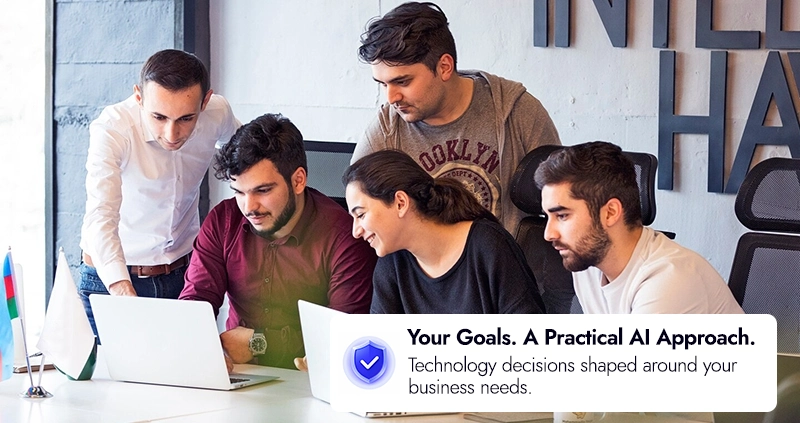

Business-Focused AI Development
We begin by understanding the problem your business needs to solve, then assess whether an AI solution is appropriate for the intended outcome.

Relevant AI Engineering Expertise
From large language models and machine learning to intelligent automation, we consider the techniques that best fit your use case and technical requirements.
Clear Project Communication
Keep requirements, deliverables, dependencies and project decisions aligned throughout planning and development, with clear expectations at each stage.

Testing Before Deployment
Evaluate functionality, response quality and relevant failure scenarios against agreed requirements before an AI application is released.
Data Privacy and Access Controls
Consider data sensitivity, user permissions, information handling and applicable security requirements when planning AI-enabled workflows.

Integration with Existing Systems
Assess how the proposed AI solution can connect with supported business applications, APIs, databases and internal workflows.

Practical Scope and Expectations
Define the initial requirements, technical constraints, dependencies and acceptance criteria to help keep project scope realistic and measurable.

Support and Future Improvements
Where included in the agreed engagement, review application performance, address issues and identify opportunities for ongoing refinement.
Frequently Asked Questions About AI Development in Sydney
Find answers to common questions about choosing an AI development partner, planning custom solutions, integration, costs and project timelines.
Let’s Build Something That Works.
Tell us what you're trying to achieve. We'll help you define the right technology, scope the opportunity, and determine the best next step.

What Happens Next?
Share your requirements, discuss your options with our team, and understand the next steps for your project.
Tell us about your project
Share your goals, challenges, timeline, and what you're looking to build.
Meet with our team
We'll discuss your requirements and ask the right questions.
Explore the right approach
We'll identify the technology, scope, and potential next steps.
Get a clear path forward
No pressure. Just practical recommendations based on your business.
Tell Us About Your Project
Share a few details so we can understand what you're looking for.